


Naturehike Lightweight 32F Sleeping Bag
Ultra-compact synthetic bag that packs down small enough for a kid's backpack and handles damp Pacific Northwest conditions without getting soggy.
Why we love it
- Compresses to grapefruit size for tight minivan packing
- Synthetic fill stays warm when damp, unlike down
- Lightweight enough kids can carry their own bag
Pros
- Ultra-compact compression sack included
- Lightweight synthetic fill machine washable
- Roomy 80x33 inch cut fits growing kids comfortably
- Durable double-reinforced seams hold up to rough packing
Cons
- 32F comfort rating runs cold on frosty nights
- Synthetic bulk doesn't match true backpacking bags

Naturehike CW295 Down Bag 42F
Ultralight 650-fill down bag that packs to the size of a water bottle, rated for spring and fall nights without the ultralight-solo-hiker price tag.
Why we love it
- Weighs 1.3 lbs, fits anywhere in the minivan
- 650-fill down compresses to fist size, expands fluffy
- RDS certified down stays ethical and loft-rich
Pros
- 650-fill down insulation
- Individual down channels prevent shifting
- Water-repellent shell fabric
- Two-way YKK zipper zips to a second bag
- Ultralight at 1.3 pounds
Cons
- Rated limit temp, not comfort zone
- Down loses loft if it gets damp

Naturehike 650FP Down Sleeping Bag
Lightweight down bag rated to 40°F, packs small enough for weekend trips but runs cold for shoulder season.
Why we love it
- 650-fill down compresses to fist size
- Two-pound weight suits car camping or light trips
- Hybrid mummy-rectangular cut lets kids shift around
Pros
- 650-fill down insulation
- Ultra-lightweight at 2 pounds
- Hybrid mummy-rectangular design
- Compression sack included
- RDS-certified ethical down
Cons
- Rated 40°F, runs cold for actual comfort
- Down performs poorly when damp

QEZER 600 Fill Down Bag 45F
Lightweight down bag rated for shoulder-season camping. Good packability, but temperature limit means layering on chilly nights.
Why we love it
- Packs to fist-size for car or kid backpack
- 600-fill down compresses small, stays light
- Mummy cut with wide foot box, less cramped
Pros
- 600-fill down insulation
- Compact 1.61 lb packed weight
- Wide trapezoidal foot box
- Dual zippers, couples mode
- Tear-resistant nylon shell
Cons
- 45F comfort, 36F limit only
- Down loses loft when damp

BORULL Ultralight 50F Sleeping Bag
Lightweight rectangular bag that packs small and keeps kids warm on cool nights without breaking the bank.
Why we love it
- Packs to soccer ball size, fits anywhere in the van
- Machine washable fill handles wet gear and repeat trips
- Roomy 79 inches fits growing kids comfortably
Pros
- Ultralight at 1.5 pounds
- Whole-piece continuous fill stays distributed
- Dual-side zipper with auto-lock
- Affordable entry bag for families
- Machine washable synthetic fill
Cons
- Limited warmth below 32 degrees
- Not ideal for serious backpacking trips

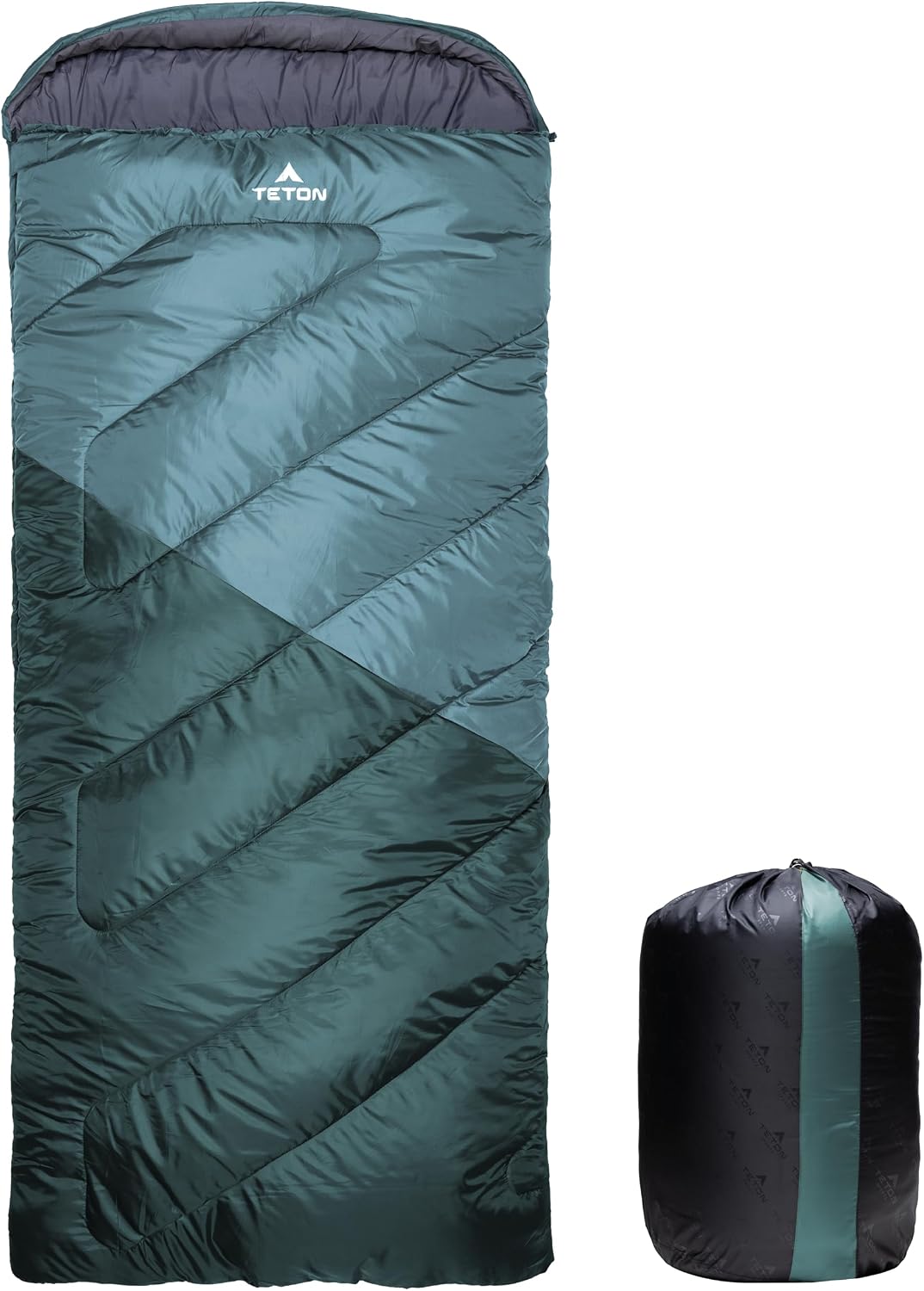
Teton 20F Sleeping Bag
Affordable mummy bag with microfiber fill that handles damp conditions better than down on Pacific Northwest weekend trips.
Why we love it
- Microfiber insulation resists moisture on wet trails
- Roomy footbox keeps restless kids comfortable
- Stuffs small enough for a minivan camping load
Pros
- Microfiber fill performs when damp
- Roomy footbox design
- Includes compression stuff sack
- Priced under $70
- Zipper draft tube
Cons
- Synthetic fill bulkier than down
- Rated limit, not comfort temperature
What Weight Actually Means at 2 a.m.
Best ultralight sleeping bags sit at the intersection of two hard truths: every gram you shed from your pack is a gram you don’t carry to a cold camp, and every gram saved usually comes from insulation, loft, or fabric that makes the bag less durable or less warm. The picks above range from under two pounds down to around one and a quarter, but that number only matters if the bag still works when you need it.
Most people chasing ultralight sleep systems stumble on the same rocks: they buy by weight alone and end up cold, or they buy by price and end up replacing it in two seasons. The real test is whether a bag delivers its temperature rating after being packed compressed for weeks, whether the fabric holds up to trail wear, and whether you actually sleep in it or just carry it.
Packed Size Versus Actual Insulation
A one and a half pound bag packs to the size of a soccer ball because something got cut. Usually it is either shell durability, insulation quality, or draft protection. The Lightweight Compact Adult Sleeping Bag for Backpacking, Camping & Hiking uses synthetic microfiber and compresses to 7.9 inches. That synthetic fill stays lofty after repeated compression, which matters if you are packing and unpacking the same bag every weekend. Down compresses smaller but loses loft if you leave it in a stuff sack for months. Neither is wrong; it depends whether you value the difference between 4.7 inches and 7.9 inches more than you value staying warm after a damp night.
Fill Type and Wet Weather Reality
Synthetic ultralight bags handle moisture better than down, period. If you camp on the coast or in the Cascades in shoulder season, this matters. The microfiber in entry ultralight bags does not lose loft when damp, though it is not water repellent either. Down ultralight bags like the Naturehike Ultralight Backpacking RDS Down Sleeping Bag with 650 fill power are lighter and more compressible, but one night of ground seepage clumps the down into useless knots. If you sleep on a quality pad with a ground sheet, down works. If you are improvising, synthetic is the safer call.
Temperature Rating Versus Actual Sleep Depth
An ultralight 20-degree bag does not mean you sleep comfortably at 20 degrees. It means you survive at 20 degrees if you are layered and on a pad with an R-value around 3. Ultralight bags cut insulation to save weight, so the real comfort range sits about 10 degrees warmer than the limit rating. A 30-degree ultralight bag is honest for spring and fall camping down to around 40 degrees on the ground. Below that, you either layer aggressively or accept that you will be cold.
Shell Durability on the Trail
Ultralight bags use thin nylon shells, often 20 denier or less. That fabric tears if you brush it against sharp rock or grab the bag carelessly. Look for bags with reinforced stitching along the seams and around the zipper, because that is where tears start. The Naturehike Lightweight Compact Sleeping Bag includes double-reinforced seams. A week of trail use will tell you whether the shell holds or becomes a patchwork.
The lightest bag is useless if it tears before the trip ends.
Why Ultralight Bags Trade Warmth for Weight
How Much Insulation Gets Cut
Standard 20-degree bags have 600 to 900 grams of fill. Ultralight versions have 300 to 400 grams. That 50 to 60 percent reduction is why the weight drops by half. It also explains why your comfort range shrinks. The tradeoff is real and deliberate. You gain backpack room and shoulder relief. You lose the ability to sleep comfortably in colder weather unless you pair the bag with an insulated pad and wear base layers.
Down Clumping After Washing
Down bags need hand washing in cool water, never machine wash and never dry cleaning. Even then, down clumps if you wring it or let it sit damp. Recovery takes hours in a dryer on low heat or days of air drying while you fluff it repeatedly. Synthetic bags tolerate machine wash because the fibers are bonded to the shell. If you wash bags regularly or after a damp trip, synthetic ultralight bags require less fussing and less risk of permanent damage.
Zipper and Draft Collar Design
Ultralight bags often drop the full draft collar and instead use a small velcro or elastic opening around the neck. That saves weight but leaves a seam gap where cold air leaks around your shoulders. A proper draft collar covers the zipper seam completely. If shoulder cold wakes you at 3 a.m., that collar does matter, and you are paying for its absence in ultralight designs.
How Ultralight Fits Your Pack and Your Trip
Weekly Trips Versus Expedition Load
Ultralight makes sense if you hike distances where pack weight compounds. A half pound saved on your sleeping bag might be all the margin you need to skip a rest day. On overnight car camping trips or weekend out-and-backs under 15 miles, the difference between 1.5 pounds and 2.5 pounds does not matter, and you probably sleep warmer in the heavier bag. Choose ultralight for specific trips where weight discipline is the plan, not as a general category.
Storage Between Seasons
Ultralight bags stuffed into a compression sack for six months can develop permanent loft loss, especially down. Hang or loosely roll ultralight bags during the off-season. Synthetic bags tolerate compression better but still benefit from loose storage. If you store bags compressed, you are paying for ultralight weight reduction but then erasing it through seasonal damage.
Pad Pairing and Ground Insulation
An ultralight bag without a quality pad is a false economy. The ground steals heat faster than the air around you. You need a pad with an R-value of at least 2.5 to reach the bag’s stated temperature comfort range. Many people buy the lightest bag, skip the pad upgrade, and then wonder why they sleep cold. The bag and pad are a system.
Ultralight bags demand a real pad. Without one, you are just cold and light.
What Gets Cut at This Weight
Entry Ultralight (Around 1.5 Pounds)
At this weight, expect synthetic fill, limited draft protection, and a thin shell that requires care. Temperature comfort sits around 45 to 50 degrees. These bags work for fair-weather backpacking and are genuinely washable. They do not handle surprise cold nights or damp conditions well. They are also affordable enough to treat as seasonal gear rather than a forever bag.
Mid-Range Ultralight (1.2 to 1.3 Pounds)
Down fill enters here, along with slightly better shells and some draft collar protection. Temperature comfort drops to around 40 degrees if you pair it with a pad and layers. RDS certified down means the supply chain was audited for animal welfare. The tradeoff is moisture sensitivity. These bags are worth the extra cost if you commit to proper storage and washing.
Premium Ultralight (Under 1.2 Pounds)
High-fill-power down (650 to 850), minimal but well-designed shells, and strategic draft tubes show up here. Temperature ratings approach 30 degrees while staying ultralight. Cost jumps because every design decision has been refined. These bags suit committed ultralight hikers who understand their systems and use them correctly.
Tips From the Trail
- Tap the bag before first use. Down needs fluffing after compression. Gently shake and tap the bag for a few minutes to redistribute the fill and restore loft.
- Store it loosely during off-season. Hang ultralight bags on a hook or drape them over a rod. Never leave them compressed for months. Ultralight insulation recovers slowly once loft is lost.
- Wash synthetic bags in cold water on gentle cycle. They survive machine wash better than down. Air dry or use a dryer on low heat. Do not hang-dry synthetic bags in direct sun.
- Hand wash down bags with cool water and mild soap. Wring gently without twisting. Rinse thoroughly until water runs clear. Dry on low heat for several hours, fluffing every 30 minutes.
- Check the zipper before every trip. Thin nylon shells mean zipper damage is a common failure point. Run the slider slowly and feel for catches. Bring a small repair kit with spare zipper sliders.
- Pair ultralight bags with a ground sheet. Dirt and sharp objects tear thin shells. A $10 footprint under the bag saves expensive repairs.
Common Questions
Does a 20-degree ultralight bag really sleep you at 20 degrees?
No. That 20-degree rating is the limit, not the comfort range. You sleep warm at that temperature only if you are insulated underneath with a pad rated R-value 3 or higher, wearing heavy base layers, and in still air. Real comfort is around 10 degrees warmer than the limit rating. Plan trips accordingly.
How long does an ultralight bag last with regular use?
Ultralight bags take faster damage because the shell is thinner. A well-maintained synthetic bag lasts three to five seasons of regular trips. Down bags last longer if stored properly but require more careful washing and drying. Expected lifespan assumes gentle packing, prompt washing after damp trips, and loose storage between seasons.
Can I use an ultralight bag in winter camping?
Not safely. Ultralight bags lack the insulation and draft protection that winter requires. If you want an ultralight bag for winter, you are choosing the wrong tool. Winter camping demands thicker insulation and full draft collars. Ultralight shines in three-season use.
What is the difference between RDS down and regular down?
RDS (Responsible Down Standard) certification means the down came from birds raised for food, not from live-plucking. The fill power and insulating properties are identical. RDS is an ethical sourcing guarantee, not a performance upgrade. Both work equally well for insulation.
Should I compress my ultralight bag before every trip?
Only if you have a pack volume limit and need the compressed size. Compression is wear on the insulation, especially down. If your pack accommodates the bag loosely, leave it uncompressed. You trade a few cubic inches for longer bag life.
Can I use an ultralight bag as a summer quilt instead?
Some ultralight bags unzip fully and lay flat, but they are not designed as quilts. The draft collar and zipper design assume the bag is zipped around you. You lose warmth efficiency and the zipper catches on things if the bag is spread open. If you want a quilt, buy one designed as one.


Write Your Review
No reviews yet. Be the first to share your experience!