

ECOOPRO Warm Weather Sleeping Bag
Lightweight rectangular bag rated 55-60F, compresses small enough to fit a kid's pack or your overstuffed minivan.
Why we love it
- Fits two kids or one adult comfortably
- Rolls down to the size of a loaf of bread
- Waterproof nylon shell handles damp mornings
Pros
- Waterproof outer shell
- Compact packed size, 1.7 lbs
- Rectangular cut gives kids legroom
- 55-60F rating covers shoulder-season trips
Cons
- Rated temp is a limit, not comfort
- Heavier than a mummy bag for backpacking

JAICOM Sleeping Bag Liner, 86x35in
Lightweight liner adds 5 degrees of warmth and hygiene to any bag without bulk, or doubles as a solo summer blanket.
Why we love it
- Adds 5F warmth without doubling your bag weight
- Separate foot zipper lets you vent when it's too warm
- Machine washable and dries fast for frequent trips
Pros
- Independent foot zipper for temperature control
- L-shaped double-sided zipper design
- Hook and loop fastener keeps zipper tight
- Fully opens to a large travel blanket
- Ultra-lightweight at 1.2 pounds
Cons
- Not a standalone bag for cold weather
- Thin polyester, not durable alone in brush

WKFAMOUTCAMP Lightweight Bag
Affordable rectangular bag that zips together for couples and packs small, but better suited for warm-weather car camping than serious backpacking.
Why we love it
- Zips to a second bag for shared warmth
- 2.75 lbs packed down with compression sack
- Roomy rectangular cut for restless sleepers
Pros
- Convertible zip-together design
- Lightweight with included sack
- Anti-snag zipper with lock
- Brushed polyester lining
Cons
- 130g fill limits cold-weather use
- Hoodless design loses neck warmth

TANSTRIDER Compact Sleeping Bag 40F
Budget rectangular bag with a draft collar that keeps kids warm on cool nights and survives stuffed in the minivan.
Why we love it
- Draft collar + hood cinch trap heat on frosty mornings
- Unzip the feet for venting without losing warmth
- Machine washable after damp trips or muddy camp gear
Pros
- Draft collar and insulated hood
- Two-way zipper with anti-snag guard
- Roomy rectangular cut for kids
- Compression sack included
- Machine washable synthetic fill
Cons
- Heavy and bulky for backpacking
- Rated limit temperature, not comfort zone

MalloMe Sleeping Bag 50-80°F
Lightweight, waterproof sleeping bag that handles Oregon shoulder-season camping and fits kids and adults without the ultralight-backpacker price tag.
Why we love it
- Waterproof HEX-TECH shell sheds rain on wet dispersed camping trips
- Compression sack packs into minivan with all the other family gear
- Roomy enough for kids to sleep comfortable, not cramped
Pros
- Waterproof HEX-TECH outer shell
- Anti-snag zipper with no catches
- 3-pound weight, easy to carry
- Bottom zipper for foot ventilation
- Adjustable hood fits different sizes
Cons
- 50-80°F range limits cold mountain trips
- Polyester fill isn't down insulation
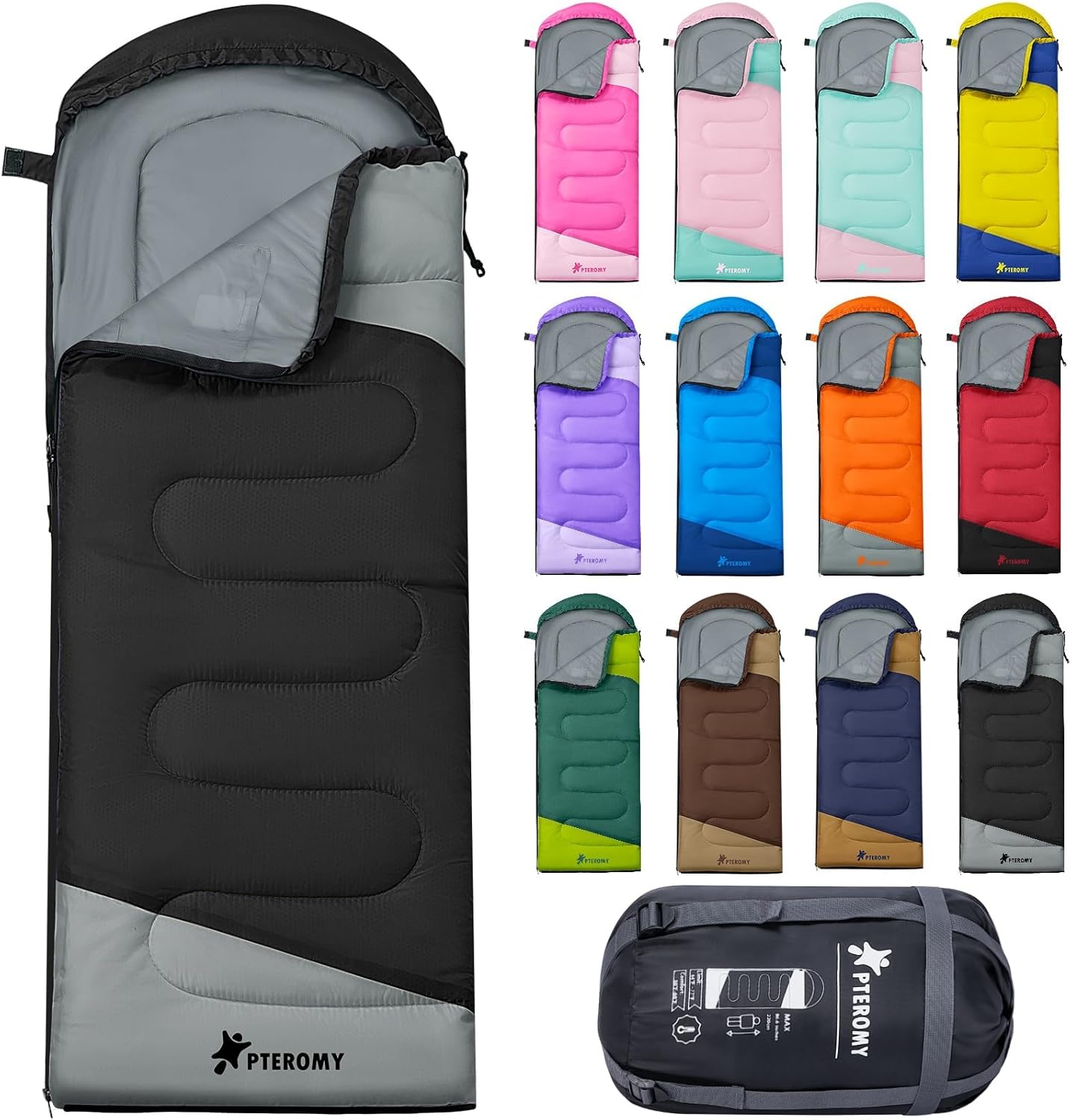
PTEROMY 3-Season Sleeping Bag
Machine-washable rectangular bag that handles damp family trips and packs down without fuss for car camping or occasional trail overnights.
Why we love it
- Machine washable after damp coastal weekends
- Two-way zipper lets kids ventilate when warm
- Rectangular cut gives room for restless sleepers
Pros
- Machine washable synthetic fill
- Two-way zipper for temperature control
- Rectangular shape with interior space
- Includes compression sack
- Water-resistant and windproof
Cons
- Rated limit around 40F, not true cold
- Heavier than mummy bags for backpacking
Warm Nights Need Different Gear
Best sleeping bags for hot weather aren’t built to trap heat like winter bags. They’re designed to dump it. That sounds simple until you realize most online reviews come from people who tested bags in their living rooms and called it research. A bag rated for 80 degrees might actually be miserable at 75 if the shell doesn’t breathe or if the design traps your body heat instead of letting it escape. I’ve spent 14 years packing bags away damp on coastal trips, swapping my winter down gear for something lighter come July, and watching friends buy three-season bags for late-summer trips because they didn’t understand the difference.
The picks above handle summer and shoulder seasons across the Pacific Northwest. Some breathe hard. Some include vents you actually need. Some compress down so small you’ll carry them on trips where you used to leave the tent behind. The gap between what the tag promises and what happens at 2 a.m. is where these bags either earn their place in your pack or get left behind.
Ventilation Is Not Optional
A warm-weather bag without good air flow becomes a sweat trap. Look for designs that let moisture escape without losing the insulation you do need on cool mornings. Two-way zippers that open from the bottom are the fastest way out when you wake up hot. The PTEROMY Sleeping Bags for Adults puts a two-way zipper at your feet, so you can open just that section for venting without unzipping your torso. Mesh panels or ultra-thin linings also matter. A heavier 240T poly pongee outer shell traps more heat than a breathable 100% polyester lining, which is why Lightweight Compact Sleeping Bags by WKFAMOUTCAMP stays cooler on warm nights despite its hoodless design.
Weight Hits Different in Summer
Warm weather means lighter loads and faster trips. You’re often hiking longer days instead of alpine push-throughs, so shaving a pound or two from your sleep system changes how the whole trip feels. Most of these bags stay under 3 pounds. That 1.35kg (roughly 3 pounds) PTEROMY bag comes in a compression sack that collapses to pocket size. Compare that to a 0 degree winter bag at 5 or 6 pounds, and you’ll understand why so many of these picks come from backpackers who won’t accept anything that doesn’t pack small. The trade-off is lifespan. Ultralight shells tear easier. They require gentle handling.
Synthetic vs. Imitation Down Matters Now
Synthetic fills stay lofty after getting damp, which matters on humid coastal nights or near water. Imitation silk cotton loses warmth when wet but often costs less and compresses better. The MalloMe Sleeping Bags for Adults uses a 3D inner synthetic fiber fill rated 50 to 77 degrees. It stays warm even after machine washing, so you can actually clean it between seasons without worrying about clumping. The WKFAMOUTCAMP bag uses 130g/㎡ imitation silk cotton, which gives you warmth for cool mountain mornings but requires air drying.
Temperature Rating Accuracy
Summer bags are often rated by comfort temperature, not limit temperature. A bag labeled 50 to 80 degrees means it’s comfortable at 50 and starts shedding insulation around 80. That’s not the same as survival temperature. The PTEROMY’s stated range of 50 to 80 degrees (with a limit of 40 to 90) tells you it will work for spring and fall camping. The TANSTRIDER and MalloMe bags top out at 77 degrees comfort, which is their real ceiling on warm nights. Pad R-value also shifts the equation. A 2-season bag on an R-value 2.5 pad sleeps warmer than on bare ground, so matching your sleep system matters as much as the bag alone.
Two-way zippers and breathable linings stop you from overheating before it wakes you up.
Construction Details That Actually Work
Draft Collars and Hoods in Summer
Warm bags often skip full hoods and instead use a drawstring collar. That’s intentional. A hood traps heat you need to dump. The TANSTRIDER and MalloMe bags include draft collars around the neck, which seal in warmth on cool mornings without the full coverage of a mummy cut. You can draw it tight or leave it loose depending on the night. Full hoods appear on bags rated for 0 and 20 degrees. They have no place on a 50 to 80 degree setup.
Rectangular Versus Mummy Cut
Rectangular designs offer more interior room and let air move around your body. The WKFAMOUTCAMP bag is a hoodless envelope style at 78.74 by 32.67 inches, which gives you space to shift positions without restriction. A narrower mummy cut traps heat efficiently in winter but becomes claustrophobic and sweaty in summer. Most of these picks are rectangular or semi-rectangular, which is why. The trade-off is packed size. Rectangular bags don’t compress as tight as mummy bags, so if weight and volume are both critical, you might sacrifice space for efficiency.
Zipper Quality and Draft Tubes
Check the zipper before you commit. A smooth, snag-free two-way zipper that doesn’t bind matters more on hot nights when you’re opening and closing constantly. The MalloMe and TANSTRIDER bags both feature double-sided zippers with guards that prevent the slider from catching fabric. A draft tube (a thin tube of insulation inside the zipper) stops heat leakage in winter bags but is often omitted here to reduce weight and let air flow freely. These bags either skip it entirely or use a minimal version.
Seam Work and Water Resistance
Double S-shaped stitching or double-layered construction adds durability without much weight penalty. The PTEROMY and MalloMe bags both use this approach. The outer shell should be water-resistant but not waterproof, because waterproof shells trap condensation inside. Nylon outer shells (like the ECOOPRO Warm Weather Sleeping Bag) hold up to friction and ground moisture without turning into a sweat box.
Seam stitching and shell choice determine whether your bag breathes or becomes a humidity trap on humid nights.
Sizing and Real-World Fit
Length and Shoulder Room
Summer bags come in standard lengths around 78 to 86 inches. Check your height against the specs, not against what a winter bag was. If you’re 6 feet or taller, confirm the bag reaches past your toes. The PTEROMY bag is 7 feet 2 inches (220cm), which accommodates adults up to 6 to 7 feet tall. If you’re over that, your feet will hang out, and cold air gets in even on warm nights. Width matters too. At 30 to 31.5 inches wide, these bags are snug for broad-shouldered sleepers. If you sleep on your side and roll around, test the fit at home before committing.
Trying It On Before the Return Window Closes
Set it up in your bedroom and actually lie in it for 20 minutes. Pay attention to whether the draw collar closes comfortably around your neck, whether you feel trapped, and whether air moves around your body. A bag that feels roomy in the store can become claustrophobic after an hour. Check for cold spots where the edges don’t meet your sleeping pad. Hot spots where insulation bunches up matter less in summer, but pressure points on your hips (if you’re a side sleeper) will become obvious fast.
Weight Distribution and Zipping
Lie in it and practice zipping it open and closed with your eyes shut. You’ll be doing this in the dark at 3 a.m. The TANSTRIDER and MalloMe bags are praised for snag-free zippers, which means they won’t bind even if you’re half asleep and rushing. The velcro securing strap that keeps the zipper from creeping open is also worth checking. Open it once, then close it again while watching how the bag behaves. Does the insulation bunch? Does the collar twist?
What to Pair It With
Sleeping Pad Pairing
Summer bags with synthetic fill don’t rely on the sleeping pad for heat, but your pad still affects comfort. An R-value 1 closed-cell foam pad or inflatable works fine for 50 to 80 degree conditions. Pair one of these bags with a hard ground or thin air mattress, and you’ll feel every pebble because you’re not getting bottom insulation. Your pad doesn’t have to be high-R, but it should exist. The ground temperature matters in summer camps too. Cold rock or damp soil pulls heat from underneath, and no top insulation can compensate.
Wearing Layers Inside
A bag rated for 50 degrees comfort doesn’t mean you sleep naked at 60 degrees. Wear lightweight sleep clothes, especially on cool mountain nights. Cotton sleepwear lets skin breathe and wicks sweat. Merino wool or synthetic blends do the same without trapping moisture. If you’re cold at 60 degrees, a thin fleece layer inside the bag works better than zipping the bag closed, because you can shed it instantly if you overheat.
Ventilation Setup with Your Pad
If your sleeping pad covers most of your torso, prop the foot end open so air flows underneath. Many of these bags have foot vents you can unzip independently. Use them. Heat needs an escape route. On warm nights, don’t stuff the bag under the tent rainfly unnecessarily. Tent condensation adds moisture that makes the bag feel damp even in summer. Position your pad and bag so air can move around both. Crack the tent door if the night is truly hot and bugs aren’t an issue.
Tips From the Trail
- Dry it completely before storing. Any lingering moisture in synthetic fill invites mildew during off-season storage. Air dry in sunlight whenever possible, not in direct heat.
- Machine wash on gentle with cold water. Synthetic and imitation cotton fills survive washing better than down does. Use a gentle cycle and air dry afterward. Never tumble dry.
- Store uncompressed in a mesh bag. Compression damages loft over time. Stuff your bag in a large mesh bag between trips so it breathes and stays lofty for next season.
- Test venting at home before your trip. Practice opening the foot zipper or side vents while lying down. You’ll know how to operate it in the dark without waking yourself up.
- Check the seams for weak spots after washing. Double-stitched seams last longer, but inspect where the collar attaches and where the zipper starts. Catch small tears early.
Common Questions
Does the temperature rating actually mean I’ll be comfortable at that number?
The comfort temperature is an estimate, not a guarantee. It assumes you’re wearing typical sleep clothes and using a sleeping pad with R-value around 2. Your metabolism, how much you ate that day, humidity levels, and whether you’re using a liner all shift the actual number. If the bag is rated for 50 degrees comfort, expect to be warm at 50 in calm conditions. Add wind, damp, or a poor sleeping pad, and you’ll notice the cold.
Can I use a summer bag in spring and fall?
Yes, if you layer appropriately. A 50 to 80 degree bag handles early June mornings and late September evenings without issue. For 40-degree nights, add a sleeping bag liner to boost warmth by 5 to 10 degrees. Liners add almost no weight or packed size, and they extend the range of any bag you own.
What happens if I take a summer bag into actual cold weather?
You’ll be cold and uncomfortable. These bags shed insulation instead of trapping it. A 50-degree bag at 35 degrees feels like nothing. Save it for the season it was built for. Mismatching season to gear is how people end up bailing off trips or sleeping in their car.
How do I know if synthetic or imitation down is better for my trips?
Synthetic stays warm when damp, which matters on coastal trips and near water. Imitation cotton packs smaller and costs less, but loses warmth if it gets wet. For summer trips in the Cascades where mornings are dry, imitation cotton works. For coastal Peninsula trips where sea fog and night dampness are constant, synthetic is worth the extra ounces.
Do compression sacks ruin the insulation if I leave them compressed long-term?
Yes. Permanent compression damages synthetic and imitation fills. Use the sack for transport only, then store the bag uncompressed in a mesh tote or hanging closet organizer. Most of these bags come with a compression sack, which is fine for the hike in. For storage between seasons, let it breathe.
Which of these bags is best for car camping versus backpacking?
Weight doesn’t matter as much in car camping, so pick based on interior room and whether you like the rectangular envelope design. For backpacking, the lightweight options under 3 pounds make the cut. Pair the bag with your activity. A 3-pound rectangular bag is perfect car camping on a warm July weekend. That same bag’s lack of warmth makes it useless in May or September unless you layer heavily.


Write Your Review
No reviews yet. Be the first to share your experience!