

REDCAMP Cotton Flannel Sleeping Bag
Durable cotton flannel bag that handles Oregon shoulder-season camping without breaking the budget.
Why we love it
- Cotton flannel lining stays comfortable in damp conditions
- Two bags zip together for family sleeping setup
- Stuff sack packs small enough for minivan trips
Pros
- Cotton flannel lining breathes well
- Hollow fiber fill handles 5-32°F range
- Waterproof exterior wipes clean easily
- Right or left zipper option
- Two-person capacity for smaller kids
Cons
- Heavier than modern synthetic bags
- Cotton can retain moisture if wet

Kanyak 32F Sleeping Bag
Rectangular bag that zips together with another for couples, machine washable, and handles frosty family camping nights without the backpacking weight.
Why we love it
- Unzip it flat to use as a blanket or duvet
- Zips to a second bag for double-wide sleeping
- Machine washable synthetic fill dries quickly
Pros
- Rectangular cut gives kids plenty of room
- Side and foot zippers for temperature control
- 32F rated temperature for shoulder-season camping
- Four-pound packed weight fits in a minivan
- Machine washable, no dry-clean headache
Cons
- Runs cold at the rated limit temperature
- Bulky compared to mummy bags for backpacking
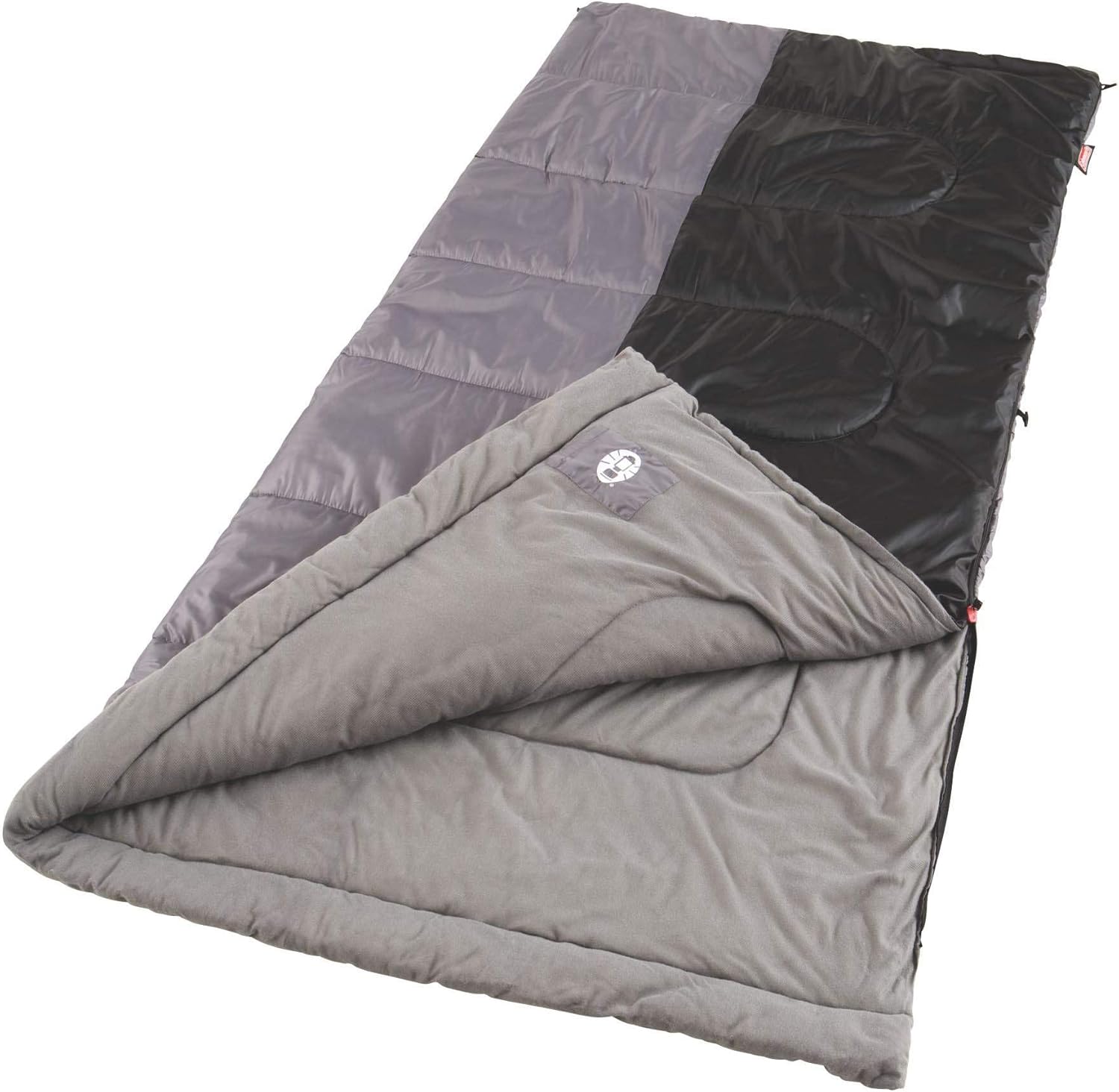
Coleman Biscayne 40F Sleeping Bag
Rectangular bag rated to 40F with a two-way zipper for venting, sized for adults up to 6'4. Good for car camping and mild nights.
Why we love it
- Two-way zipper lets you vent on warmer nights
- Zips to a second bag for shared warmth
- Roomy cut fits most adults without feeling cramped
Pros
- Two-way zipper for temperature control
- Fits adults up to 6 feet 4 inches tall
- Soft brushed polyester cover and liner
- Anti-snag ZipPlow system
- Includes stuff sack for packing
Cons
- 40F rating is a limit, not comfort range
- Synthetic fill bulks up when packed

Kelty Wayback 20F Sleeping Bag
Rectangular bag with flannel lining and built-in blanket that keeps kids warm on cool nights and handles minivan chaos.
Why we love it
- Organic cotton flannel interior feels softer than nylon
- Snap-off blanket lets you dial in warmth on the fly
- Rectangular cut gives kids room to move around inside
Pros
- Flannel-lined interior
- Built-in snap-down blanket
- Roomy rectangular shape
- Recycled synthetic fill
- Organic cotton lining
Cons
- 6-pound weight limits backpacking use
- Bulky packed size for car camping

JEAOUIA Sleeping Bag 50-68F 3LBS
Budget sleeping bag that works for shoulder-season family camping and car trips, though the temp rating runs warm and the fill won't handle real cold.
Why we love it
- Foot zipper lets you dial temps without full unzipping
- Compresses small enough for the minivan or backpack
- Machine washable, no babying required after trips
Pros
- Affordable at under $25
- Lightweight at 3 pounds
- Drawstring hood seals in warmth
- Two-way zipper opens from feet
- Compact packed size
Cons
- Temp rating tops out at 68F, runs warm
- Hollow fiber fill won't handle real cold nights

Friendriver XL Sleeping Bag
Budget rectangular bag with enough room for a kid to move around, waterproof exterior, and synthetic warmth that handles damp conditions.
Why we love it
- XL cut gives kids space to shift without feeling trapped
- Waterproof shell sheds morning dew on state park trips
- Light enough to pack in the minivan without regret
Pros
- Spacious XL interior
- Fully waterproof construction
- Lightweight for car camping
- Synthetic fill performs when damp
- Budget-friendly price
Cons
- 0-degree claim likely a limit, not comfort rating
- Bulky packed size for backpacking trips
Room Over Mummy: Why Shape Matters
A rectangular best rectangular sleeping bags design opens up in ways a mummy cut never does. The straighter walls give you actual shoulder room, hip space, and the ability to move without feeling trapped. I’ve been cold in bags that promised warmth but cut off circulation at the shoulders. A rectangular bag lets you sleep on your side without the hood folding over your face or the zipper riding up your neck.
Most people who reach for a rectangular bag are car camping or doing short trips where weight matters less than comfort. The trade-off is bulk. They pack bigger and weigh more than a mummy-cut equivalent, but that’s the point. You are not threading a pack. You are throwing this in the truck bed or the cabin corner.
The Interior Width and Hip Girth
Width changes everything. A standard rectangular bag runs 32 to 36 inches across. That sounds wide until you are actually in it and realize your shoulders are still compressed. The Kelty Wayback 20F Degree Flannel Lined Rectangular Sleeping Bag hits 72 inches at the hip and shoulder, which is genuinely roomy. Compare that to entry-level bags at 31 to 32 inches. You feel the difference immediately. Side sleepers especially notice. If you toss at night or have broad shoulders, measure before you buy.
Temperature Rating and What It Means
The number on the tag is the limit, not the comfort zone. A bag rated to 32 degrees means a standard man can survive at 32 degrees without hypothermia. It does not mean you will sleep well. Women typically feel cold 10 degrees higher than the rating suggests. Add another 10 to 15 degrees if you are a side sleeper who tends to compress fill under pressure. The Kanyak Exploreendlessnights 3-4 Season Camping Sleeping Bag lists comfort at 41 degrees, which is a more honest read. Pair any bag with an insulated pad (R-value 3 or higher) to reach the rated number.
Fill Type and Moisture Behavior
Synthetic fills handle damp. Down clumps when wet and takes forever to dry. Synthetic fibers keep some loft even when damp. In the wet coastal air where I camp half the year, a synthetic bag stays usable when a down bag becomes a cold brick. The trade-off is weight and packed size. Synthetic bags bulk larger and weigh more per degree of warmth. If you camp in dry high desert or mountains, down works. If you are near water or in the Pacific Northwest, go synthetic.
Zipper Design and Draft Tubes
A two-way zipper lets you open the bag from the foot end to vent when you get too warm, then seal back up at night. That flexibility matters in shoulder seasons. Check whether the bag has a full-length draft tube. A draft tube blocks cold air from leaking along the zipper when it is sealed. Cheaper bags skip this. You wake up with a cold stripe down your side where the zipper sits. A bag with a full-length draft tube and a hood that cinches tight will keep heat in when a thinner design bleeds it away.
A rectangular bag that feels tight in the shoulders is not a bag that sleeps warm.
Seasonality and Weight Trade-offs
Spring and Fall Camping
A three-season bag rated between 40 and 50 degrees handles most shoulder-season trips. You pair it with a pad, wear light base layers, and sleep fine. The JEAOUIA Sleeping Bags for Adults Backpacking Lightweight tops out at 50 degrees on the comfort range. That works for April and October camping in Oregon. The bag weighs 3.3 pounds, which is light for a rectangular, but still twice what a backpacking quilt weighs.
Winter Expeditions
When temperatures drop below 20 degrees, you need a 0 or 10-degree-rated bag paired with a high R-value pad and proper base layers. The weight penalty is real. Winter bags run 4 to 6 pounds. The Friendriver XL Size Upgraded Version claims 0-degree protection and weighs 3 pounds, which is an outlier. Most bags that cold weigh more. You are paying for denser fill or more of it.
Car Camping Only
If you never hike to the campsite, weight becomes irrelevant. You can use a heavier bag without penalty. That opens up options. Heavier bags often feel more durable and compress less over time. The Coleman Biscayne runs 40 degrees and is entry-level priced, aimed at car camping. You throw it in the car, use it 3 or 4 nights a year, and do not worry about pack weight.
Packed size matters more than weight for rectangular bags since you can not compress them much without damaging fill.
Checking and Fitting Before the Return Window Closes
Shoulder and Hip Room Test
Unroll the bag at home and get inside with the clothes and layers you actually sleep in. Lie on your side. Your shoulders should not touch the walls. Your elbows should bend without pressing. Slip your hand under your hip. There should be a finger-width gap between your hip and the bag floor. If the bag feels snug in any of these positions, it will feel suffocating after 8 hours. A rectangular bag that reads tight in the shoulders is not one that will sleep warm. Pressure points prevent blood flow to areas that need it for heat.
Zipper Glide and Draft Seal
Zip and unzip the bag 20 times. Does the zipper catch fabric? Does it stall halfway? Run your hand along the sealed zipper line. Feel for cold air leaking through. In a quality bag, the draft tube and lining sit flush to the teeth. In cheaper bags, you feel small gaps. Grab the hood drawstring. Cinch it tight around your face. It should form a snug tunnel that leaves only your nose and mouth exposed. Sloppy hoods leak heat.
Pad Pairing and Ground Insulation
Lay the bag on your actual sleeping pad. Do you sleep on an inflated pad, a foam pad, or a platform bed at home? Use that setup. The bag works with your pad system, not alone. If the bag rating is 32 degrees and your pad R-value is 2, you are actually good to 45 or 50 degrees on the ground. If your pad is R-value 5, the bag performs closer to its rated number. This matters for shoulder-season trips where a weak pad kills the setup.
Interior Lining and Zipper Slider Feel
Touch the interior fabric. Is it pilled and rough or soft and smooth? Cheap interior linings pill after a few uses. The slider on the zipper should glide smoothly without catching. A chunky or resistant slider either needs lubrication or is a sign of poor construction. These details seem small. They are not. You spend 8 hours in that bag on a cold night. Details matter.
Tips From the Trail
- Store uncompressed. Rectangular bags are harder to compress than mummy cuts. Forcing one into a stuff sack repeatedly can damage fill. Keep it loose in a closet between trips.
- Air it out after each trip. Lay it in the sun for a few hours. This restores loft and evaporates moisture trapped in the fill.
- Wash every two years, not every season. Frequent washing breaks down fibers and reduces loft. Spot-clean instead. When you do wash, use a gentle detergent and air dry completely.
- Pair with a sleeping pad rated R-3 or higher. The ground pulls heat from underneath. Your bag rating assumes an insulated pad underneath you.
- Cinch the hood around your face on cold nights. Up to 40 percent of heat loss happens through your head. A loose hood bleeds that heat fast.
- Wear dry base layers to bed. Damp clothing inside the bag kills insulation. Change out of what you wore hiking.
Common Questions
Can I zip two rectangular bags together?
Yes, if both bags have side zippers that match. The Kanyak model includes dual side zippers for this purpose. Two bags zipped together give you a double that works for couples or families. Make sure both bags have identical zipper placement and slider type, or they will not align properly.
What is the actual difference between comfort and limit temperature ratings?
Comfort is where a standard adult sleeps well. Limit is where a standard adult can survive without hypothermia. There is a 10 to 15-degree gap between them. If a bag says 41 degrees comfort and 32 degrees limit, that range tells you what the bag is built for. Do not count on sleeping comfortably at the limit number.
Does a flannel lining really stay warmer than polyester?
Flannel feels warmer on bare skin because it has a softer nap that traps air next to your body. Polyester is smoother and moves heat away from you faster. For car camping where you wear pajamas or base layers, both work. For backpacking where you sleep in layers, the difference is minimal. Flannel adds weight and takes longer to dry if damp.
How long does a rectangular bag hold up with regular use?
A quality synthetic bag used 30 to 40 nights a year lasts 8 to 10 years before loft noticeably decreases. Down bags last longer if kept dry, but fail fast in damp conditions. Entry-level bags may show compression damage after 3 to 4 years of frequent use. Proper storage between seasons extends life by several years.
Is a bigger bag always warmer?
No. A bag so loose that you rattle around inside it sleeps cold because air circulates around your body instead of staying trapped. The fill has to be close enough to your skin to trap dead air. Too tight and you compress the fill under pressure. The sweet spot is contact without pressure.
What should I do if my bag gets wet in the field?
For synthetic, wring out excess water and dry it in the sun as much as possible. Synthetic retains some loft even damp. For down, you are in trouble. Down loses almost all insulation when wet. Your best move is to double-bag in a dry sleeping bag with someone else if you can, or move to shelter. Once home, hang the bag to dry completely before storing, which can take a week or more.


Write Your Review
No reviews yet. Be the first to share your experience!