

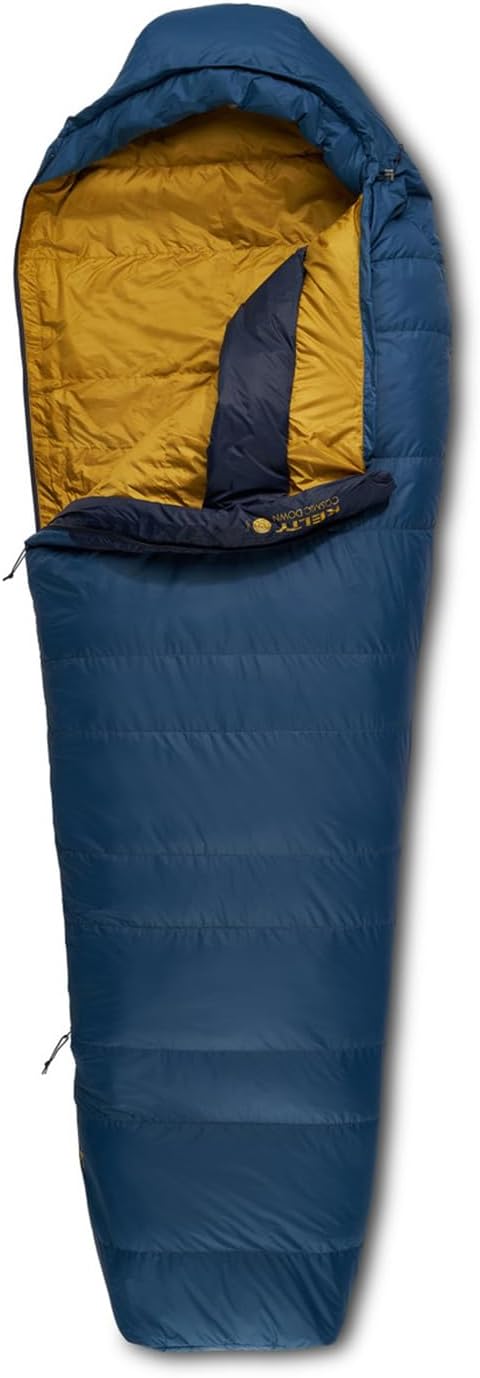
Kelty Cosmic 20 Down Sleeping Bag
A 20-degree down bag that actually stays warm on frosty nights and stuffs small enough for family weekend trips.
Why we love it
- 550-fill down compresses tight for minivan packing
- Draft tube and half-zip let you vent without full unzip
- Roomy footbox keeps kids' feet comfortable all night
Pros
- 550-fill down insulation
- Trapezoidal baffles prevent loft shifting
- Dual sliding zippers for temperature control
- Includes compression sack
- PFAS-free recycled shell and liner
Cons
- Half-length zipper limits full venting options
- 20-degree rating is limit, not comfort zone

Naturehike 0 Degree Down Sleeping Bag
Mummy bag with solid 650-fill down and draft collar that handles cold state-park nights and shoulder-season Cascades camping.
Why we love it
- 650-fill down compresses small for minivan trips
- Draft collar and U-neck collar trap heat on frosty nights
- RDS-certified down means ethical sourcing you can verify
Pros
- 650-fill down insulation
- Insulated draft collar and U-neck
- C-shaped wrap design maximizes top warmth
- YKK two-way zipper
- Tapered mummy cut packs tight
Cons
- Mummy fit is snug for side sleepers
- Down needs careful hand washing

Kelty Supernova 40 Down Bag
Roomy down bag that keeps kids warm through chilly state-park nights and packs small enough for occasional backpacking trips.
Why we love it
- Roomy spoon shape fits restless sleepers
- 550-fill down compresses small for the minivan
- Zips to a second bag for family warmth
Pros
- Roomy spoon-shaped design
- 550-fill down insulation
- Anti-snag zipper with locking sliders
- Packs down with included stuff sack
- Recycled shell and liner materials
Cons
- Heavier than ultralight backpacking bags
- Down requires careful washing

Kelty Galactic Down 30 Sleeping Bag
550-fill down bag that zips to a second for family trips, compresses small enough for the minivan, and keeps kids warm on frosty nights.
Why we love it
- Zips to a matching bag for couples or families
- 550-fill down packs tight, unpacks lofty and warm
- Two-way zipper lets you vent or cinch down as needed
Pros
- 550-fill down insulation
- Zips together for 2-person configuration
- Two-way zipper for temperature control
- Compresses to minivan-friendly size
- Stuff sack included
Cons
- 30-degree rating is a limit, not comfort zone
- Down needs careful drying after damp trips

ZOOOBELIVES Ultralight 32-50F Down Bag
Lightweight 650-fill down bag rated 32-50F, compact enough for backpacking but warm enough for family state-park trips.
Why we love it
- 27 oz packed weight saves space in a stuffed minivan
- 650-fill down compresses to the size of a water bottle
- Foot vent lets kids adjust warmth without unzipping fully
Pros
- 650-fill down insulation
- Full-length YKK zipper for easy entry
- Footbox vent for temperature control
- Compresses to 11.8 x 6.7 inches
- Two bags zip together for couples
Cons
- Down loses loft if it gets damp
- Rated limit, not comfort at 32F

HLITMOUT 680FP Down Bag XXL
Spacious rectangular bag with 680-fill down that keeps kids warm on shoulder-season camping trips without the backpacking weight penalty.
Why we love it
- 680-fill down compresses small for minivan trips
- 90-inch length fits tall kids and adults alike
- Zips to a second bag for family warmth sharing
Pros
- 680-fill down insulation
- Rectangular cut for side-sleeper room
- Two-way zipper for temperature tuning
- XXL dimensions suit taller sleepers
- Connectable to matching bags
Cons
- Down loses warmth when damp
- Heavier than mummy-cut alternatives
Down Fills the Gap Between Weight and Warmth
After 14 years of packing, washing, and sleeping in best down sleeping bags, I know the difference between what a hang tag promises and what actually keeps you warm at 2 a.m. Down insulation compresses smaller than synthetic, lofts higher, and holds heat longer when it stays dry. But down also fails in wet conditions, demands careful storage, and costs more upfront. These 6 bags represent the range of down performance: from ultralight three-season bags to cold-weather mummy cuts to rectangular car-camping options.
The picks above share one trait: they all use down as the primary insulation, not synthetic. That choice alone shapes everything about how they pack, how they perform, and how you care for them. Understanding fill power, recognizing the difference between comfort and limit ratings, and pairing the right bag with a sleeping pad are the three moves that separate a warm night from a miserable one.
Fill Power Determines How Much Air the Down Traps
Fill power is a number that measures how many cubic inches one ounce of down occupies. Higher numbers mean the down clusters are larger and trap more dead air. A 550-fill bag like the Kelty Cosmic 20 Down Mummy Sleeping Bag uses less down by weight to reach the same warmth as a 400-fill bag. The trade-off is cost: 650-fill and 680-fill bags cost more and pack smaller, but they demand gentler handling. Down clusters break under repeated compression, so a high-fill bag stored loose will outlast one crammed in a stuff sack for months.
Comfort Rating vs. Limit Rating: Know Which Number Matters
Every bag carries two temperature numbers. The comfort rating is where you sleep warm without layers. The limit rating is survival mode, where you stop getting colder but you are not comfortable. A 20-degree comfort rating means the bag keeps you warm at 20 degrees in a t-shirt and long underwear on an insulated pad. The limit might be 0 degrees. That gap matters because manufacturers often advertise the limit, not the comfort. The Naturehike 0 Degree RDS Down Mummy Sleeping Bag carries a 29-degree comfort rating with an 18-degree limit, meaning real warmth sits 11 degrees above the number in the name.
Pad R-Value Moves Your Real Temperature Rating
A down bag alone does not make the rating. The insulation between you and the ground matters as much as the insulation above. A sleeping pad with R-value 3 or higher pairs with most three-season bags. Cold-weather bags demand R-value 4 or higher. Without the pad, the down compresses under your body weight and loses all its insulating air. This is where people get cold in bags that should work: they trust the bag rating and ignore the pad. A 20-degree bag on a thin pad sleeps like a 40-degree bag on a good one.
Mummy vs. Rectangular: Thermal Efficiency vs. Room
Mummy bags taper at the feet and shoulders, trapping warm air and cutting down the volume you have to heat. A 20-degree mummy bag uses less insulation than a 20-degree rectangular bag because the shape is efficient. The Kelty Supernova Down Fill Sleeping Bag splits the difference with a spoon shape, wider at the hips and shoulders than a mummy but tapered at the feet. Rectangular bags give you room to move and can unzip flat as a blanket, but they require more insulation to reach the same rating because air circulates inside. Choose mummy for backpacking and cold weather, rectangular for car camping and mild seasons.
Down loses loft when wet, synthetic does not. Know your forecast before you commit to down.
Fill Power Is Not the Whole Story
Down Quality and Ethically Sourced Fill
Not all 550-fill down is the same. RDS (Responsible Down Standard) certification means the down comes from birds raised for meat, not live-plucked. IDS (International Down and Feather Bureau) testing verifies the fill power claim is real. A bag with certified down costs more but holds its value longer because the clusters do not break down as fast. The Naturehike bag carries both RDS and IDS certifications and includes 650-fill duck down at 85 percent down content, meaning 15 percent feather. Higher down percentage means better insulation per ounce, but bags with more feather cost less and still perform well for three-season use.
Wet Performance: Down Fails, But Recovery Is Possible
Down loses loft when wet because water collapses the air pockets. A soaked down bag is useless until it dries. Synthetic bags stay lofty even when damp. If you camp in wet coastal air or high-altitude rain, down is the wrong choice. But if you keep your bag dry and pack it in a waterproof stuff sack, down will outlast synthetic. After a damp night, hang the bag in the sun for an hour or two. The down will re-loft as it dries. Repeated wet cycles shorten the bag’s life, so avoid compression storage and do not leave it packed wet for days.
Compressibility and Packed Size
Down compresses to a fraction of its lofted size. The ZOOOBELIVES Ultralight Backpacking 32-50F Down Sleeping Bag weighs 27 ounces and compresses to 11.8 by 6.7 inches, small enough to fit in a day pack. A rectangular bag with the same warmth would pack three times larger. This is why down dominates backpacking. The trade-off is that long-term compression damages the clusters. If you store a bag stuffed in a compression sack for six months, the down will not re-loft fully. Store down bags loose in a mesh bag or hung in a closet between seasons.
Care, Storage, and Lifespan
Washing Down Without Destroying the Loft
Down bags need washing every few years, not after every trip. Dirt and body oils break down the clusters. Use cool water, a down-specific soap, and a gentle cycle or hand wash. Rinse until the water runs clear. Dry on low heat with wool dryer balls to break up clumps. Machine drying is faster than air drying but risks overheating the nylon shell. Never dry-clean a down bag. The solvents strip the natural oils that keep the down flexible. If you wash it wrong once, the bag loses loft permanently.
Storage Between Seasons
Hang your down bag in a mesh storage sack or lay it flat in a closet. Never store it compressed in the stuff sack it came with. Compression storage for more than a month flattens the down permanently. If you live in a humid climate, add a moisture absorber to the storage area. Down absorbs humidity and loses loft in damp conditions. Check the bag before each season. If the down feels clumpy or the bag does not loft fully after unrolling it, hang it in the sun for a few hours to restore air circulation.
Signs a Down Bag Is Reaching the End
A down bag lasts 10 to 15 years with good care. The first sign of age is uneven loft, where some areas feel thin and others feel thick. This happens when down migrates through stitching or when clusters break down from repeated compression. The second sign is that the bag no longer reaches its rated temperature. If you are cold in a bag that kept you warm five years ago, the down has lost enough loft that it no longer works. At that point, replacement is cheaper than trying to restore it.
Store it uncompressed and it will outlast three synthetic bags.
What Pairs With a Down Bag
Sleeping Pad R-Value and Insulation Pairing
A down bag’s temperature rating assumes you are on an insulated pad. The pad blocks ground cold from stealing heat from the down. A 20-degree bag on a thin foam pad (R-value 2) sleeps like a 40-degree bag on a good inflatable pad (R-value 4 or higher). For three-season bags rated 20 to 40 degrees, use a pad with R-value 3 or higher. For cold-weather bags rated 0 to 20 degrees, stack two pads or use a single pad with R-value 5 or higher. Lay the bag on top of the pad, not inside it. Down compresses under your weight, so the pad below matters more than anything above.
Sleeping Liners and Warmth Layers
A sleeping liner sits inside the bag and adds 5 to 10 degrees of warmth without much bulk. Use one if you are between sizes or if you camp in shoulder seasons where a lighter bag plus liner is more versatile than a single heavier bag. A liner also protects the bag from body oils and sweat, extending its life. Wear base layers inside the bag. Cotton holds moisture and makes you cold. Merino wool or synthetic long underwear keeps you dry. A knit cap traps heat that would otherwise escape from your head.
Moisture Management on Damp Nights
Down loses loft if condensation forms inside the bag. On cold nights when the air inside the bag is warmer than the shell, moisture condenses on the nylon. Crack the bag open or crack the tent window to let humidity escape. A draft collar around the neck and a hood cinched tight reduce the volume of air you have to warm and cut down condensation. If the bag feels damp in the morning, hang it in the sun for an hour. Most of the moisture will evaporate. Do not pack it away wet.
Tips From the Trail
- Unfold the bag the day before you use it. Down needs time to re-loft after compression. Lay it out in your bedroom or hang it in the sun for a few hours so it reaches full loft before you sleep in it.
- Pair the bag with the right pad R-value. A thin pad will make even a premium down bag sleep cold. Check your pad’s R-value and match it to the bag’s rating.
- Use a stuff sack, not a compression sack, for storage. Compression sacks are for travel. Long-term storage in compression damages the down permanently. A mesh stuff sack lets the down breathe.
- Wash the bag every three to five years, not every season. Frequent washing breaks down the down clusters. Spot-clean stains and wash only when the bag smells or feels oily.
- Store the bag loose in a cool, dry place. A closet or under-bed storage works better than a vacuum-sealed bag. Down needs air circulation to stay healthy between seasons.
- Check the bag before each trip. Unroll it and let it loft for 30 minutes. If it does not reach full loft, hang it in the sun or lay it out longer. A bag that does not loft fully will not keep you warm.
Common Questions
Does the temperature rating on a down bag actually mean what it says?
The comfort rating is usually accurate if you follow the assumptions: you are on an insulated pad with R-value 3 or higher, you are wearing base layers, and you are in calm conditions. The limit rating is conservative and assumes you are trying to survive, not sleep well. If you are between sizes or camp in variable conditions, assume the bag will perform 10 degrees warmer than its limit rating and 5 degrees colder than its comfort rating in real conditions.
Can I use a down bag in humid coastal weather?
Down works in humid air if you keep it dry. Pack it in a waterproof stuff sack, not a mesh one. Hang it to dry every morning if there is sun. If you camp in wet coastal air most weekends, synthetic is the better choice because it stays lofty even when damp and dries faster.
How do I know if my down bag is actually down and not a down-like synthetic?
Check the tag for the percentage of down versus feather. A bag labeled 80 percent down, 20 percent feather contains mostly down. A bag labeled 100 percent down contains no feather. Synthetic bags use polyester or other man-made fibers and will say so on the tag. RDS or IDS certification confirms the down is real and traceable.
What should I do if my down bag gets soaked?
Hang it to dry as soon as possible. Do not pack it wet or store it compressed while damp because mold and mildew will grow inside. If the bag dries within a day or two, the down will re-loft and there is no permanent damage. If it stays wet for days, the down may clump permanently and lose loft.
Is a higher fill power always better?
Higher fill power packs smaller and weighs less for the same warmth, so it is better for backpacking. For car camping where weight and packed size do not matter, a 550-fill bag works just as well as a 650-fill bag and costs less. The trade-off is that high-fill down is more fragile and requires more careful handling and storage.
Can I zip two down bags together to make a double bag?
Yes, if both bags have compatible zippers on the same side. The Kelty Cosmic 20, Supernova, and Galactic bags all have two-way zippers that work with each other. Unzip both bags fully and lay them flat, then zip them together along the length. The combined bag will have a seam down the middle and will be heavier and bulkier than a purpose-built double bag, but it works for couples or for extra warmth on very cold nights.


Write Your Review
No reviews yet. Be the first to share your experience!